

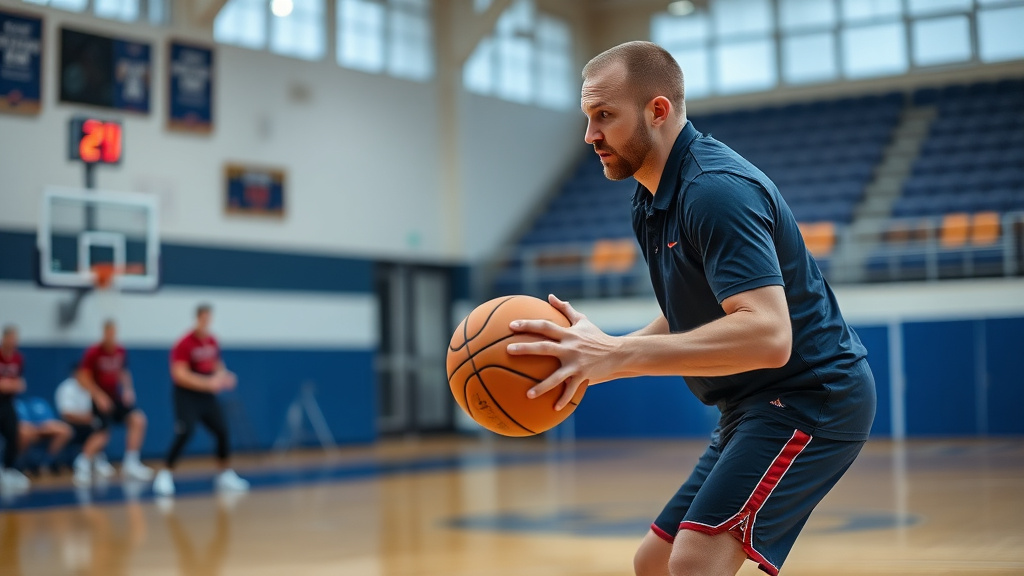
Ball handling is the foundation of elite guard play, separating good players from great ones. In this article, a experienced coaching expert reveals the essential drills that convert untapped potential into elite-level dribblers. Whether you’re training emerging point guards or refining your own skills, these established methods focus on building court vision, enhancing foot movement, and enhancing overall ball control. Discover the particular drills coaches use to develop NBA-caliber guards and elevate your performance.
Basic Exercises for Ball Handling
Developing ball control starts with grasping the fundamentals that elite guards depend on daily. These foundation drills develop the motor memory and hand-eye connection necessary for reliable execution in high-pressure situations. By investing time to these critical workouts, players gain the mental edge to perform advanced techniques during match play. The drills progressively increase in challenge, allowing guards to strengthen their weaknesses while maintaining proper technique throughout every repetition and variation.
Regularity in performing fundamental exercises directly correlates with improved performance on the court. Professional coaches stress that repetition creates automaticity, allowing players to focus on reading defenses and making strategic decisions. These drills ought to be done daily, incorporating different hand combinations and speeds. Starting with basic movements allows guards to establish correct foot positioning and hand positioning, creating a solid base for sophisticated handling skills that will be presented in subsequent training phases.
Stationary Dribbling Techniques
Stationary dribbling constitutes the foundation of all ball-handling development. Players must develop proficiency in dribbling in place with both hands working independently before progressing to intricate footwork. This drill requires maintaining a low athletic stance while managing the basketball at various heights and speeds. Focus on keeping the ball close to your body, using fingertip control rather than palm pressure. Perform figure-eight patterns around your legs, alternating hands smoothly. This fundamental training builds hand strength and develops the tactile sensitivity required for complex ball control.
Professional guards dedicate significant effort perfecting stationary dribbling because it reduces dynamic variables and emphasizes basic ball mastery. Execute fast-paced dribbles with both hands, gradually increasing speed while maintaining control. Practice crossover dribbles in place, alternating between hands in front of your body with accuracy and rhythm. Incorporate through-the-legs dribbles while stationary, developing familiarity with ball handling passing beneath your body. These techniques build essential foundations necessary for executing more complex movements during live game play and competitive play.
Movement-Based Ball-Handling Techniques
Once stationary techniques are perfected, guards progress to dribbling patterns that involve movement that mirror actual game play. These drills involve dribbling while moving in different directions, integrating footwork changes and body positioning adjustments. Perform straight-line dribbling at increasing speeds, maintaining control while accelerating and decelerating smoothly. Execute cone drills that necessitate fast changes in direction, requiring players to adapt their dribbling rhythm and hand placement. These patterns build the coordination needed for moving through congested areas of the court while protecting the basketball from defenders.
Game-simulation exercises prepare guards for actual game situations where opponents pressure ball handlers. Practice zigzag dribble movements throughout the court, emphasizing quick initial movements and managed slowing. Include retreat dribbles and hesitation moves that generate separation from imaginary defenders. Execute transition drills that develop speed and control during transition situations. These movement-focused workouts build confidence in dribbling while operating at match intensity, guaranteeing guards can execute scoring actions with precision while retaining control and generating offensive chances for the team.
Intermediate Ball Handling Progressions
Once guards develop proficiency in basic dribbling techniques, advancing to sophisticated skill sequences becomes essential for competitive success. These higher-level skill drills challenge players to preserve ball security while completing movements in multiple directions and fast-paced shifts. Progressive complexity strengthens mental toughness and muscle memory, helping guards to maintain composure during intense play during live competition. Coaches highlight that regular training with progressively harder exercises results in enhanced play on the court.
The progression from basic to higher-level progressions requires focused attention on ball handling coordination and court awareness. Guards must build the skill to dribble without looking at the ball while simultaneously reading defensive positions and anticipating open passing options. Advanced drills feature realistic game situations, forcing players to make quick decisions while preserving possession control. This phase of progression separates top-tier guards from standard competitors by building true basketball awareness and instinctive decision-making abilities.
Implementing structured progressions methodically ensures guards improve at appropriate paces without feeling overwhelmed. Coaches should introduce a single new step bi-weekly, giving sufficient time for proficiency before moving forward. Tracking each player’s development helps recognize specific weaknesses requiring extra focus and training time.
- Figure-eight dribbling through legs with dynamic crossovers
- Stationary ball exchanges hand to hand at different heights
- Movement-based dribbling with defensive pressure and contested shots
- Behind-the-back crossovers paired with rapid directional shifts
- High-speed transition exercises incorporating full-court action
Game-Scenario Training and Implementation Methods
Transitioning ball handling skills from practice to game situations requires carefully structured drills that mirrors authentic game pressure and decision-making processes. Elite coaches integrate game-speed drills where guards must execute ball handling techniques while defending against live opponents, handling physical demands, and interpreting defensive strategies. These drills recreate quarter-ending situations, transition opportunities, and high-pressure moments that demand accurate ball handling under stress. By replicating game conditions during practice, guards establish the muscle memory and confidence necessary to perform complex dribbling patterns when it matters most, transforming isolated skill work into competitive advantage on the court.
One core competitive drill includes the 3v3 transition drill, where guards need to move the ball down the floor while processing rapid choices about offensive spacing and attacking the paint. Coaches introduce defensive intensity to force guards to maintain control while evading defenders, enhancing their capacity to protect the basketball during crucial moments. Another essential application is the pick-and-roll drill with live defense, giving guards the chance to work on ball handling in the standard offensive set in basketball. These drills link from basic skills to real competition, guaranteeing guards will perform with dependability when championship moments arrive.
Implementing these game-situation drills consistently throughout the season ensures guards maintain sharp ball handling skills while building the court awareness necessary for elite-level play. Increasing challenge levels and varied defensive looks make practice productive and stimulating for continuous improvement.
